Key points :
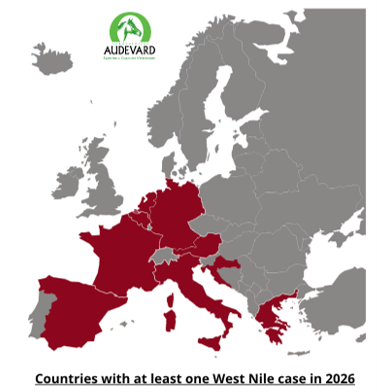
- Once mainly associated with Mediterranean regions, West Nile fever is now affecting a growing number of areas across Europe, with a significant resurgence reported in 2026.
- Transmitted by mosquitoes of the Culex genus, West Nile virus is not contagious between horses.
- Most infected horses show no clinical signs, but some may develop severe neurological disease, with mortality rates of up to 50% in affected horses.
- As there is no specific treatment for West Nile virus, prevention relies primarily on vaccination and reducing exposure to mosquitoes.
West Nile virus has been present in Europe for several decades. While equine cases were previously mainly concentrated in Mediterranean regions, the disease is now being reported further north across Europe.
Here is what horse owners need to know about West Nile virus, from transmission and clinical signs to diagnosis and prevention.
What is West Nile virus and how is it transmitted to horses?
West Nile virus (WNV), also known as West Nile fever virus, is an RNA virus belonging to the Flaviviridae family.
A transmission cycle involving birds and mosquitoes
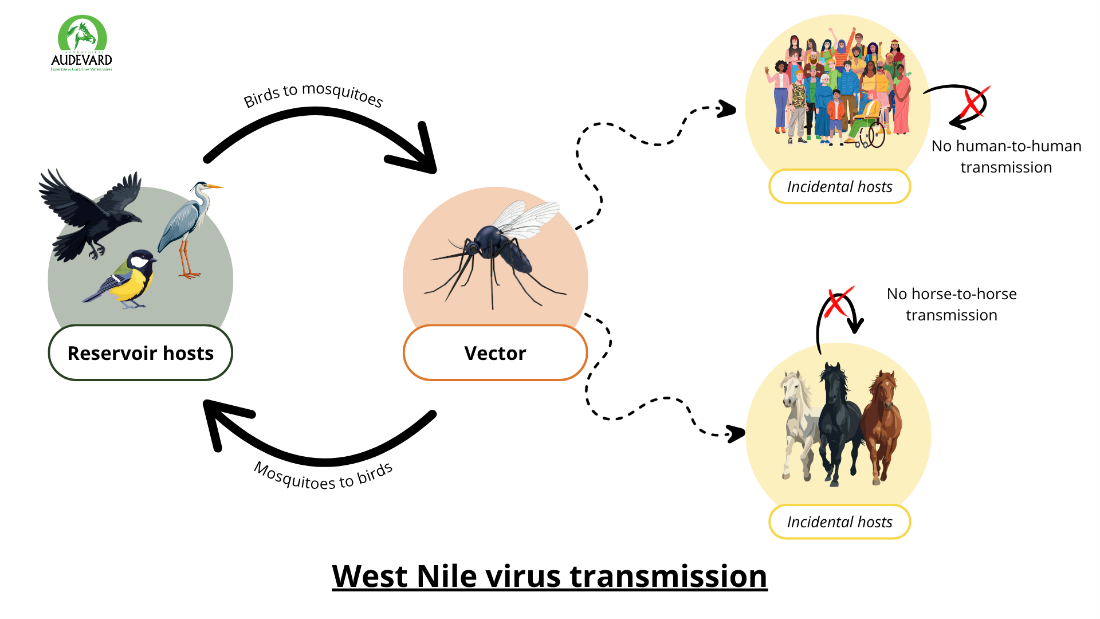
West Nile virus is transmitted to horses through the bite of infected mosquitoes, primarily those belonging to the Culex genus. These mosquitoes become infected after feeding on birds carrying the virus. Birds act as the main reservoir hosts in which the virus can replicate.
In the West Nile transmission cycle, horses, like humans, are considered incidental or “dead-end” hosts. This means that if a mosquito subsequently feeds on an infected horse, the horse does not have a sufficient level of virus in its bloodstream to infect that mosquito.
An infected horse therefore cannot directly transmit WNV to other horses or to humans.
When is the risk of transmission highest?
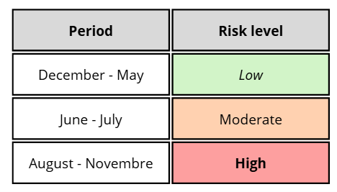
As transmission is closely linked to mosquito activity, the risk of infection is greatest during the warmer months.
Cases of West Nile disease in horses are therefore most commonly reported during the summer and early autumn.
Which areas of Europe are at risk?
For many years, West Nile disease circulation in Europe was mainly associated with southern regions, particularly around the Mediterranean basin.
However, in recent years, equine cases have been reported increasingly further north, highlighting the expanding geographical distribution of the virus across Europe.
What are the symptoms of West Nile virus in horses?
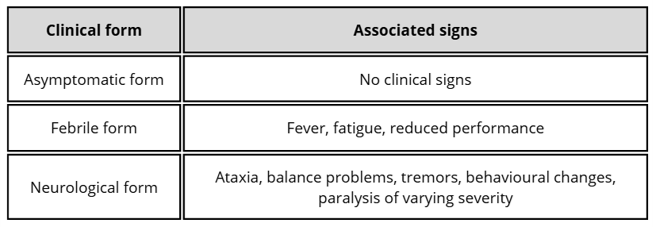
It is important to remember that most horses infected with West Nile virus do not develop any clinical signs. It is estimated that approximately 80% of infected horses remain asymptomatic.
Around 10% of infected horses develop a febrile form of the disease, with relatively non-specific signs such as:
- Fever;
- Lethargy;
- Reduced energy or performance.
Because these signs are relatively mild and non-specific, this form can sometimes go unnoticed.
In fewer than 10% of cases, horses may develop more severe neurological signs, including:
- Loss of balance;
- Muscle tremors;
- Ataxia;
- Weakness and coordination problems.
Some horses may experience neurological after-effects lasting for several months.
In the most severe cases, particularly when a horse develops paralysis or is unable to stand, euthanasia may unfortunately be necessary.
In the study West Nile Infection of Equids, published by J. Angenvoort, A.C. Brault, R.A. Bowen and M.H. Groschup, the authors report that mortality can approach 50% in horses developing neurological disease.
It is important to note that these clinical signs are not specific to West Nile virus and may also occur in horses affected by other diseases, including equine herpes virus infections.
If you notice any of these signs in your horse, it is therefore essential to contact your vet promptly. They will be able to investigate the cause, establish a diagnosis and take any necessary measures regarding other horses on the premises.
Diagnosis and management of West Nile fever
Diagnosing West Nile fever
West Nile fever in horses is a notifiable disease, so if you suspect that a horse may be infected with West Nile virus, you should contact your vet as soon as possible.
Several tests can be used to diagnose the disease. Among the most commonly used are blood tests designed to detect antibodies against West Nile virus.
These include:
- IgM (Immunoglobulin M) testing: IgM antibodies are useful markers of a recent infection, as they can be detected from around the 8th day of disease and may remain detectable for two to three months following infection.
- IgG (Immunoglobulin G) testing: Two blood samples can be taken, the first when clinical signs appear and the second approximately 14 days later. A significant increase, typically a four-fold rise, in IgG antibody levels can indicate recent infection.
Of course, laboratory results will always need to be interpreted alongside the horse’s clinical signs and vaccination status, as vaccinated horses will also have antibodies against West Nile virus.
Managing a horse with West Nile virus
As with many viral diseases, including equine influenza and equine herpesvirus infections, there is currently no specific antiviral treatment for West Nile virus in horses.
Treatment therefore focuses on managing the horse’s clinical signs and providing appropriate supportive care.
Depending on the horse’s condition, the vet may prescribe medication such as anti-inflammatory drugs or pain relief.
As treatment is primarily supportive, early diagnosis and veterinary care are particularly important, especially in horses showing severe neurological signs.
How can you protect your horse against West Nile virus?
As there is no specific antiviral treatment for West Nile virus in horses, prevention is the most effective way to protect them.
Vaccination: the best form of prevention
Several vaccines against West Nile virus are currently available for horses.
Although West Nile vaccine is not currently compulsory, it is particularly recommended:
- In areas where the virus is known to circulate;
- For competition horses or horses that travel frequently;
- For horses kept close to wetlands or other areas where mosquito populations may be high.
Vaccines currently available generally require an initial course of two injections followed by an annual booster.
Speak to your vet, who will be able to recommend the most appropriate vaccination schedule for your horse.
Reducing your horse’s exposure to mosquitoes
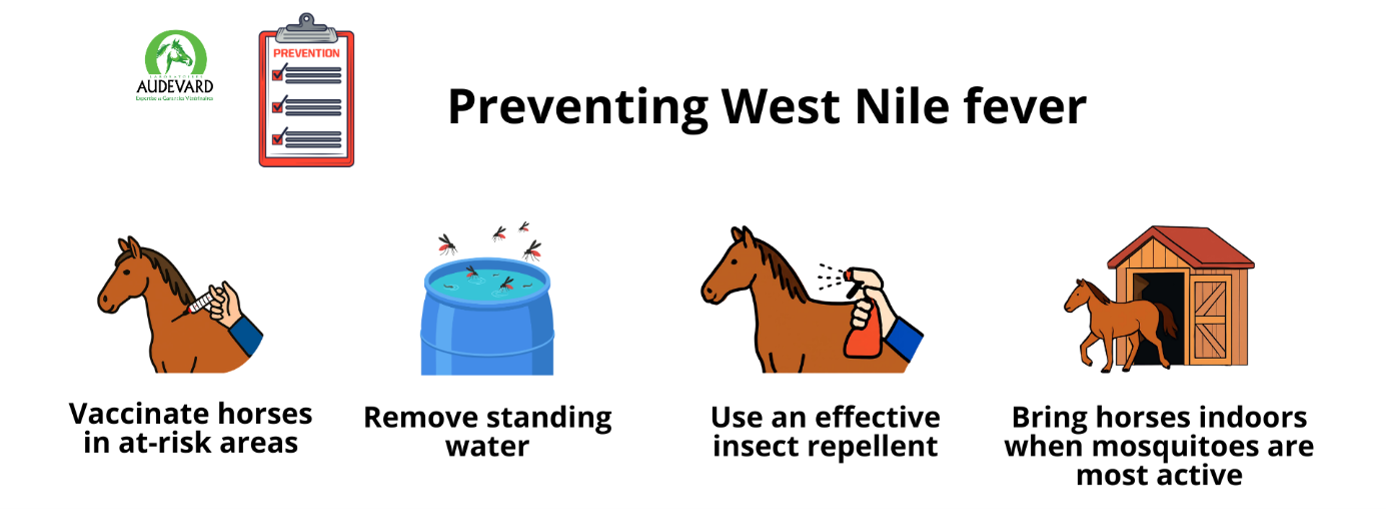
Vaccination should be combined with measures aimed at reducing mosquito exposure:
- Remove or minimise standing water around yards and stables, including ponds, ditches, containers and blocked gutters, as these can provide breeding sites for mosquitoes.
- Clean water troughs regularly to prevent them from becoming mosquito breeding sites.
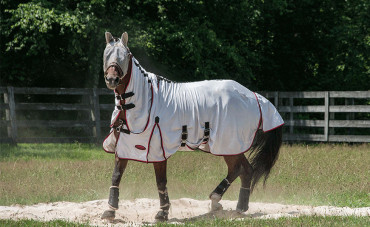
- Use insect repellents together with physical protection such as fly rugs.
- In areas with high levels of virus circulation, consider bringing horses indoors during periods of peak mosquito activity.
- Limit unnecessary lighting at night around stables, as lights may attract insects
In summary
- West Nile virus is transmitted to horses by mosquitoes, particularly those of the Culex genus, which are most active during the warmer months.
- Most horses infected with WNV show no clinical signs, but a small proportion develop neurological disease, which can be severe and potentially fatal.
- There is no specific antiviral treatment for West Nile disease in horses. Treatment is therefore based on supportive care.
- Vaccination is one of the most effective ways to protect your horse. Speak to your vet about the most appropriate vaccination schedule.
- Reduce your horse’s exposure to mosquitoes by eliminating standing water, using insect repellents and taking additional protective measures during periods of increased mosquito activity.
Q&A
Horses become infected with West Nile virus following the bite of an infected mosquito, primarily from the Culex genus.
Like humans, horses are considered dead-end hosts. This means an infected horse cannot directly transmit the virus to another horse or to a person, nor can it infect a mosquito that subsequently feeds on it.
Symptoms of Nile virus in horses vary depending on the severity of the infection and the horse:
- - Asymptomatic infection: approximately 80% of infected horses show no clinical signs.
- - Febrile form: around 10% of cases. Signs are relatively non-specific and may include fever, lethargy and reduced energy.
- - Neurological form: fewer than 10% of cases. This is the most severe form and may be associated with a high mortality rate in affected horses.
There are two key aspects of West Nile prevention:
- - Vaccination, which provides individual protection for the horse.
- - Reducing exposure to mosquito bites, for example by using insect repellents, eliminating standing water and bringing horses indoors during periods of peak mosquito activity in high-risk areas.