Popular Articles
- Equine Cushing's Disease (ECD) 19 Jan, 2024
- My horse is lame, what should I do? 16 Oct, 2023
- Tendonitis in horses 17 Oct, 2023
Blog Search
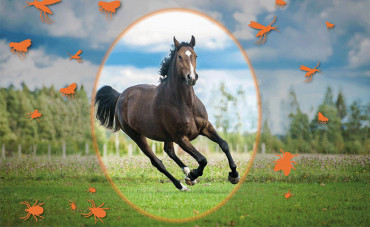
The return of sunnier days brings with it a climate that’s perfect for riding and spending more time outdoors with your horse. However, these summer temperatures also promote the proliferation of insects. Even though insects and ticks have a role to play in biodiversity, they can be carriers of disease for your horse. What illnesses can ticks and insects transmit to your horse? How do you protect your horse against insects and ticks?
Ticks and insects can be carriers of disease, and can transmit illnesses when they bite your horse.
The majority of illnesses transmitted are infectious; in other words, a pathogenic agent will be introduced into the blood and will develop in your horse’s body. These can involve viruses, bacteria, or parasites.
The diseases transmitted by ticks include piroplasmosis, Lyme disease and anaplasmosis. It is difficult to tell the difference between these illnesses without analysing the affected animal’s blood. Put simply, these three illnesses are characterised by very similar and general symptoms like fatigue, reduced appetite, poor performance or a decline in your horse’s general condition.
Certain illnesses are also transmitted by insects. These are mainly viruses.
You can also find all our recommendations in our article: how to protect your horse against insects.
Here’s a quick reminder:
Using insect repellent will allow you to protect your horse from insects without killing them and therefore limit the impact on biodiversity.
Audevard products are available from your vet.
Start typing to see products you are looking for.