Popular Articles
- Equine Cushing's Disease (ECD) 19 Jan, 2024
- My horse is lame, what should I do? 16 Oct, 2023
- Tendonitis in horses 17 Oct, 2023
Blog Search
The word "laminitis" is feared by riders across the world. This disorder occurs much more frequently than we may think – around half of cases are missed because this illness is not easy to detect. However, it is a paralysing disorder for your horse, which can even be fatal. It is estimated that laminitis occurs once every ten years for a horse. Knowing the risk factors and how to reduce its prevalence is essential – for this, it is important to understand the context of this illness.
A horse’s hoof is equivalent to a human’s nails – except in horses, these act as their feet. Similar to humans, a horse's skeletal system bears the entirety of its weight, with 30% of the horse's body weight in each front limb and 20% in each rear limb. The horse’s weight in the hoof does not rest directly on the horn. Put simply, the foot bone – known as the third phalanx – is suspended on the wall of the hoof, not by a ligament (because this would prevent the hoof from growing during the horse’s lifespan) but via a stratified system – the laminae. These are millions of miniscule structures which intertwine to form a tissue serving as the interface between the horn of the hoof and the bone.
Laminitis, therefore, is the inflammation of these laminae. As with any inflammation, it leads to tissue swelling, specifically within the laminae. This swelling adversely affects the interconnection between the third phalanx bone and the hoof, potentially altering how weight is distributed on the bone and the hoof in contact with the ground.
When a horse is afflicted with laminitis, it may lean back and, in severe cases, even lie down due to the pain. Normally, a horse places a majority of its weight on the front legs, which tend to be the most painful when laminitis strikes. Leaning backward allows the horse to alleviate the pain in the front legs by shifting more weight onto the rear legs. Laminitis can also manifest as a chronic condition, often characterised by irregular horn growth and the development of hoof bumps, which, in turn, create rings on the horse's foot.
Treating laminitis necessitates pain management and foot support through farriery. Administering anti-inflammatories can provide relief to the horse and prevent the risk of it lying down and refusing to eat or drink. Foot treatment allows adjustments in the horse's standing position, offering comfort and pain relief. Specific treatments are available depending on the root cause of laminitis, which may involve dietary modifications and addressing underlying issues.
To prevent laminitis, consider the following measures:
Grain Storage: Ensure grain storage is inaccessible to horses that might escape from their stable or paddock.
Weight Monitoring: Keep a vigilant eye on your horses' weight, as obesity heightens the risk of laminitis.
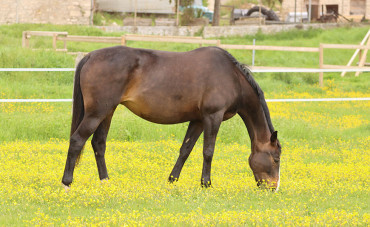
Controlled Grazing: When grazing, restrict access to lush, high-sugar grass by fencing off specific areas.
Identifying and Managing At-Risk Horses:
Laminitis can be triggered by various factors, including:
Insulin plays a crucial role in hormonal laminitis. High-sugar food consumption can lead to elevated blood sugar levels, prompting the pancreas to release insulin to regulate these levels. Another contributing factor is insulin resistance, similar to type-II diabetes in humans. In cases of insulin resistance, the pancreas releases insulin, but the body's tissues do not respond to it. This leads to persistently high blood sugar levels and continuous insulin release, potentially resulting in laminitis.
Horses prone to insulin resistance include older horses and those with Cushing's disease and equine metabolic syndrome. Cushing's is prevalent in horses over 15 years old, while metabolic syndrome can affect horses of all ages. Your vet can diagnose these conditions and provide appropriate medical treatments.
Diet plays a vital role in laminitis management. Limiting pasture access and replacing it with soaked hay can help reduce sugar intake. Consult your vet for guidance on a suitable diet that avoids causing vitamin or mineral deficiencies. Biotin supplements can support hoof growth quality during the recovery from acute laminitis.
Finally, once the acute laminitis has healed, pay attention to the quality of the horn during its regrowth. Poor-quality horn can be painful for horses and worsen the symptoms of laminitis. The quality of hoof growth can be supported by providing biotin supplements – an important protein for the synthesis of the hoof horn
Start typing to see products you are looking for.